What Are the Top 10 Latest Trends in Modular Housing?

Time:2026-11-06 Author:Madeline
0%

What are the latest trends in modular housing? The answer reaches beyond factory-built walls. It includes smarter design software, low-carbon materials, energy-efficient systems, and homes planned for easier transport and assembly. The Modular Building Institute’s 2024 Permanent Modular Construction Report puts modular construction’s 2023 share of the North American construction market at 6.64%. That figure signals growth, but also shows how much of the market still relies on conventional building methods.

The potential is substantial. McKinsey’s 2019 report, Modular Construction: From Projects to Products, says modular methods can reduce project timelines by 20 to 50 percent and costs by up to 20 percent. Those are potential gains, not guarantees; site work, transport, and design choices still matter. As Tom Hardiman, executive director of the Modular Building Institute, puts it: “Modular construction is a process, not a building type.” That distinction helps explain why current trends span both technology and delivery. Some changes are visible, like factory-fitted kitchens arriving with cabinets already installed. Others are quieter: digital coordination, repeatable components, and better tracking of materials. The ten trends ahead show where builders are experimenting—and where the industry still needs stronger evidence. Progress is real. So are the trade-offs.
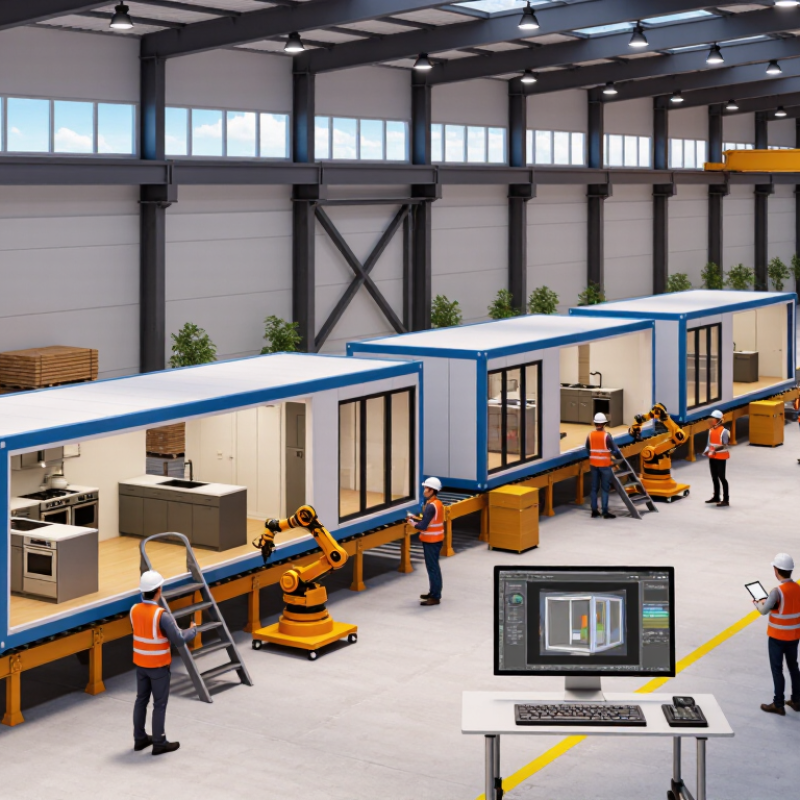
What Are the Top 10 Latest Trends in Modular Housing?

Modular Housing: Definition, Construction Process, and Market Context

Modular housing is built from room-sized or smaller sections in a factory, then transported to a site for assembly. The modules follow project-specific plans and must meet applicable building requirements. Factory work can include framing, insulation, wiring, plumbing, and interior finishes. On site, crews prepare the foundation, connect services, and join the modules. A crane may place a finished section in minutes. The visible speed is striking; the planning behind it is less visible.

The market case depends on coordination, transport distance, and design repetition. McKinsey’s 2019 report, Modular construction: From projects to products, estimated that modular construction could reduce costs by up to 20% and delivery time by 20–50% in suitable projects. These are potential gains, not guarantees, and the report covers construction broadly rather than housing alone. Factory production can improve repeatability, but late design changes may be costly. That trade-off deserves more attention.

Tips: Check what the quoted schedule includes. Ask whether transport, foundation work, utility connections, and final inspections are counted. Compare the full installed price, not just the factory-built modules. A small detail matters: confirm how joints, windows, and roof connections are protected from water.

Design Trends: Smart Homes, Flexible Layouts, and Personalization

In modular housing, smart features work best when they solve ordinary problems, not merely add screens. A room-by-room temperature sensor can reduce unnecessary heating, while a leak detector near the kitchen sink offers an early alert. Planning wiring, network access, and service panels during factory production can simplify maintenance later. Still, connected systems depend on reliable internet and sensible privacy settings. A polished dashboard is not automatically useful.

Flexible layouts can make a compact home feel less fixed. Sliding partitions may separate a work nook during the day and open the same area for dinner. Reinforced walls can also allow shelves or cabinets to move as household needs change. There is a catch. Every moving wall, plumbing line, or built-in cabinet can limit future options, so flexibility deserves practical planning, not just attractive drawings.

Personalization often comes through modest choices: warmer wood tones, a wider entry bench, or storage sized for actual belongings. Factory-built components can support these variations, though custom requests may affect cost and lead time. It helps to mark up a floor plan with daily routines before selecting finishes. A beautiful surface may wear poorly in a busy hallway. That is easy to overlook.

Production Trends: Automation, Digital Twins, and Advanced Materials

What Are the Top 10 Latest Trends in Modular Housing?

Production Trends: Automation, Digital Twins, and Advanced Materials

Automation is changing how modular homes are built. In controlled factories, robotic equipment can cut panels, place fasteners, and repeat measurements with steady accuracy. Workers still handle inspections and tasks that require judgment. The goal is not to remove people, but to reduce avoidable variation. A misaligned opening can cause trouble when a window arrives on site.

Digital twins add another layer of coordination. These virtual models can connect design details with production schedules and building systems. Teams may spot a clash between plumbing and framing before materials reach the factory floor. Useful, but not magic. The model is only as reliable as its measurements and updates. Some projects also struggle to keep design, factory, and site teams working from the same information.

Advanced materials are supporting lighter structures and better insulation. Engineered timber, recycled-content panels, and high-performance membranes can help reduce weight or improve airtightness. Each choice needs testing for durability, moisture behavior, and local climate conditions. A promising material can still create waste if workers lack clear installation guidance.

Tips: Ask how factory checks are documented. Confirm that digital models reflect the latest drawings. Request material data and installation instructions, not just performance claims. Small details matter.

Environmental Trends: Low-Carbon Building and Circular Construction

Low-carbon modular housing starts with choices made before a factory line begins. Designers can reduce material use by planning room sizes around standard sheet dimensions, limiting offcuts from timber and board. A carefully insulated wall also helps reduce heating demand, though performance depends on installation quality and local climate. Small gaps matter.

Circular construction
Circular construction takes the idea further. Components can be designed for repair, replacement, or reuse instead of being permanently bonded together. For example, screw-fixed interior panels are easier to remove than panels sealed with multiple layers of adhesive. Clear material records can help future teams identify what a component contains and whether it can be reused safely. This is useful, but documentation alone does not create a reuse market.

Factory production may make it easier to sort offcuts and control material quantities, yet transport distances and site foundations still affect a project’s carbon footprint. Recycled content also needs careful assessment: its source, processing, and durability all matter. Carbon comparisons are not always tidy. A practical low-carbon specification should consider a building’s full life, including maintenance and eventual dismantling, rather than focusing on one attractive material claim.

Market Trends: Faster Delivery, Affordability, and Urban Applications

What Are the Top 10 Latest Trends in Modular Housing?

Modular housing is gaining attention because factory-built sections can shorten on-site construction. Work on foundations and modules can happen at the same time. That matters. In a busy city, fewer weeks of construction may mean less noise and disruption for nearby residents. But delivery speed depends on transport access, site readiness, and local approvals. A delayed utility connection can erase some of the time saved.

Affordability is another major draw, though a lower module price does not guarantee a lower final cost. Buyers should also account for land, transport, cranes, foundations, and utility connections. Clear specifications help prevent costly changes late in the process. Urban projects can use narrow or irregular lots, including spaces between existing buildings. Still, tight streets and limited crane access can make installation difficult. Modular is not automatically simple.

Tips: Ask for an itemized estimate that separates factory work from site costs. Confirm delivery routes and installation needs before signing. Compare insulation, ventilation, and finish details, not just the headline price. Leave room for uncertainty; real sites rarely match the drawings perfectly.

What Are the Top 10 Latest Trends in Modular Housing? - Market Trends: Faster Delivery, Affordability, and Urban Applications

Key market directions and their practical implications. Delivery and cost outcomes vary by project, location, design, approvals, and factory capacity.

Ten notable modular-housing trends and the factors shaping their adoption
# Trend Common Application Delivery Potential Affordability Pathway Key Consideration
1 Volumetric modular construction Apartment buildings, hotels, student housing, and other repeatable room-based projects Factory production can run alongside site preparation, reducing the amount of work completed on site. Repeatable units and coordinated production may reduce labor hours and material waste on suitable projects. Transport dimensions, crane access, module connections, and early design coordination affect feasibility.
2 Panelized and component-based systems Low-rise homes, townhouses, extensions, and projects with restricted delivery access Wall, floor, and roof panels can be assembled quickly on site while avoiding some oversized-load constraints. Standardized components can support efficient purchasing and installation. Weather protection, site labor availability, and the level of factory completion influence schedule gains.
3 Hybrid modular construction Mid-rise and high-rise buildings combining modular units with conventional cores or structural frames Factory-built sections can be installed alongside site-built elements, subject to sequencing and interface planning. Using modular methods selectively can target repetitive areas without requiring an entirely modular design. Structural interfaces, fire and acoustic separation, and trade coordination require careful engineering.
4 Design for manufacture and assembly (DfMA) Projects designed around repeatable dimensions, standardized details, and efficient assembly Resolving design decisions before production can help avoid late changes and installation delays. Standardization may improve material use and reduce rework across repeated units. Late design changes can be costly once production begins; codes and site requirements still apply.
5 Digital coordination and building information modeling Projects with multiple modules, building systems, consultants, and installation stages Coordinated digital models can identify clashes before fabrication and support clearer installation planning. Earlier issue detection can limit redesign, rework, and material loss. Benefits depend on accurate models, shared information, and consistent coordination among project teams.
6 Automation and data-enabled factory production Factories producing repeated panels, components, or modules at steady volumes Automated processes can make production more consistent and less dependent on some manual tasks. Higher throughput may improve unit economics when designs and production volumes are sufficiently repeatable. Equipment investment, maintenance, workforce training, and factory utilization are important cost factors.
7 Energy-efficient, high-performance envelopes New homes designed to meet local energy codes or more ambitious efficiency targets Factory-controlled assembly can support consistent installation of insulation and air-sealing details. Reduced energy demand can lower operating costs over time, though initial costs and savings vary. Performance depends on climate-appropriate design, quality control, commissioning, and occupant use.
8 Lower-carbon and material-efficient design Projects seeking to reduce construction waste or the embodied impacts of building materials Off-site production can make cutting, sorting, and material tracking more controlled. Efficient dimensions and reduced waste can support better material utilization. Environmental outcomes depend on material sourcing, building life, transport, and the full project boundary.
9 Urban infill and accessory dwelling units Backyard homes, small infill lots, and additional housing on existing residential sites Compact units may be installed with less on-site construction, where access and utility connections permit. Adding homes within existing neighborhoods can make use of available land and infrastructure. Zoning, permitting, setbacks, utility capacity, and site access vary widely by jurisdiction.
10 Repeatable multifamily and workforce housing Apartment communities, student residences, and housing programs with recurring unit layouts Repeated layouts can support parallel factory production and site work across multiple units. Scale and standardized procurement may help manage costs, but modular construction is not automatically cheaper. Financing, land, local labor, approvals, transportation, and factory capacity all influence total project cost.

FAQS

What is modular housing?

It is housing made from room-sized or smaller sections in a factory. Crews transport and join them on site. The crane part looks fast.

How is a modular home built?

Factory teams may complete framing, insulation, wiring, plumbing, and interior finishes. Meanwhile, crews prepare the foundation. They connect services and join the sections after delivery.

Does modular construction always save time?

No. Some projects may move faster because factory work and foundation work happen together. Transport, site access, approvals, or delayed utility connections can reduce those gains. Estimates are not promises.

Is modular housing cheaper than conventional construction?

Not always. Compare the full installed price, including land, transport, cranes, foundations, and utility connections. A low module price can be misleading.

What should a project estimate include?

Ask for separate factory and site costs. Check whether delivery, foundation work, service connections, and final inspections are included. Small details matter.

How can modular housing reduce environmental impact?

Designers can plan room sizes around standard sheet dimensions to reduce offcuts. Good insulation may lower heating demand, but installation quality and local climate matter.

Can modular components be reused later?

They can be designed for repair or removal. Screw-fixed panels are often easier to take apart than heavily bonded ones. Records help, but a reuse market may not exist.

Does modular housing work well on tight urban lots?

It can fit narrow or irregular spaces between buildings. But tight streets and limited crane access can complicate delivery. Check the route before signing; I would not assume the drawings show every obstacle.

Conclusion

Modular housing is built from sections manufactured in a controlled facility, then transported to a site and assembled. This approach can make construction more predictable while still allowing homes to suit different needs. When people ask, “what are the latest trends in modular housing,” the answer includes smarter homes, flexible layouts, and more opportunities for personalization. Connected controls and adaptable spaces can help residents make better use of their homes as household needs change.

Production is also evolving through greater automation, digital twins for planning and coordination, and advanced materials designed for strength and efficiency. Environmental priorities are encouraging low-carbon building methods, reduced material waste, and circular construction practices that make components easier to reuse or recycle. At the market level, modular construction is gaining attention for its potential to shorten delivery times and support affordability. Its applications are expanding from individual homes to urban projects, where efficient use of space and more predictable construction schedules are especially valuable.

Madeline

Madeline

Madeline is a dedicated marketing professional with a wealth of expertise in our company's core offerings. With a keen understanding of the industry, she brings a unique perspective to her role, consistently delivering high-quality content that highlights the superior aspects of our products. As......